
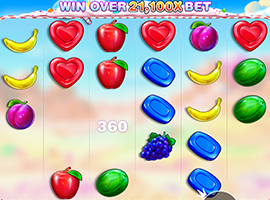
Understanding return to player is more useful than focusing on a headline win multiplier. The sweet bonanza information page can help readers identify the game, but the decisive figure is the RTP shown inside the version loaded at a particular casino. That figure describes a long-run statistical average, not a promise for one session. Canadian players should therefore check the displayed configuration, understand how the number relates to volatility, and use the operator’s account controls to keep play within an affordable limit.
What does RTP actually measure?
RTP means “return to player”. It is expressed as a percentage representing the theoretical amount returned over a very large number of spins. If a configuration has an RTP of 96.50%, the mathematical model expects $96.50 to be returned for every $100 wagered over an enormous sample, with the remaining $3.50 representing the theoretical house edge. This is not a forecast for an individual player or a single visit.

Variance makes short-term results look very different from the published percentage. A player might win quickly, lose several spins in succession, or trigger a feature without reaching the long-run average. Each spin is determined independently, so an earlier loss does not make a win “due” on the next spin. Likewise, a profitable session does not prove that the game is operating above its stated RTP.
The percentage also does not describe how often wins occur. Two games can show similar RTP figures while distributing returns differently. One may produce smaller, more frequent wins, while another may have longer quiet periods and fewer larger payouts. For a useful assessment, RTP should be read alongside the paytable, tumble rules, feature mechanics and any volatility information supplied in the game’s information screen.
Why can the displayed percentage vary?
The documented RTP range for the original version is approximately 96.48% to 96.51%, but that does not establish one universal figure for every Canadian casino. Providers can make multiple configurations available, and the operator decides which approved version is enabled on its site. A small difference in the percentage changes the theoretical house edge, although it does not predict the outcome of a particular spin.
The most reliable check is the information or rules screen after the game has loaded. Look for a clear RTP entry rather than relying on a search result, an affiliate description or a remembered figure from another website. If the screen is unclear, unavailable or inconsistent with the operator’s published information, pause and ask the operator for clarification before wagering.
Other settings should be checked at the same time. The minimum and maximum stake, available features, bonus-buy access and any optional betting mode can vary by operator or jurisdiction. An Ante Bet-style option, where available, increases the stake and changes the chance of entering the feature; it should not automatically be treated as better value. The applicable rules for the loaded version take priority over general descriptions.
How do the reels and features affect the experience?
The game uses a six-by-five grid and a Pay Anywhere structure. A qualifying win is formed when at least eight matching symbols appear anywhere on the grid, rather than along a traditional fixed payline. Winning symbols disappear, the remaining symbols fall, and new symbols enter. Several wins can therefore occur during one paid spin, but the tumble mechanic does not alter the underlying meaning of RTP.
The Scatter is represented by a lollipop symbol. Four or more Scatters can trigger the built-in Free Spins feature, which normally begins with 10 spins. Three or more additional Scatters during that feature award five extra spins. Multiplier bombs appear during Free Spins in the original configuration, with values from 2x to 100x. Values from the same tumble sequence are added before being applied to that sequence’s win.
These mechanics explain why individual results can be uneven. A feature may produce a substantial return in one session and little or nothing in another. A maximum-win figure, stated in some materials at around 21,000 times the stake, is a ceiling in the game’s mathematical design rather than a typical outcome. It should never be used to estimate likely income or justify increasing a wager after losses.
Which checks matter before choosing a stake?
Start with affordability rather than the maximum available bet. Choose a stake that can be lost without affecting rent, food, debt payments or other essential commitments. A percentage such as 96.50% describes theoretical long-run performance, but it does not reduce the possibility of losing the full amount set aside for a session. Decide the session budget before opening the game, not after an early losing sequence.
Next, decide how long the session should last and what would make you stop. A time limit, loss limit and break schedule can be more practical than trying to predict whether the next tumble will be favourable. If the casino offers deposit, loss, session or cooling-off controls, review their terms and activation timing. Availability and operation are controlled by the hosting operator and may differ according to the applicable provincial framework.

For broader Canadian information about gambling-related risks and support, consult Canada’s responsible gambling information. Treat demo play cautiously: it can show the interface and explain the mechanics, but a short virtual session cannot verify RTP, volatility or future real-money results. If play stops feeling recreational, use the operator’s support and self-exclusion resources rather than trying to recover losses.
What should you record when comparing versions?
A simple record can prevent confusion between the game’s theoretical return and the results of one session. Note the RTP displayed in the information screen, the base stake selected, whether an optional betting mode was active, and whether the game was the original version rather than a similarly named later title. This is particularly important when moving between operators or devices.
Keep the game’s built-in history separate from financial records. Game history may show previous rounds, but it does not necessarily provide the full deposit, withdrawal or account statement. The operator controls those records, as well as any account-level limits, verification requirements and promotional conditions. If bonus funds are involved, read the promotion terms independently because wagering rules are not part of the standard RTP calculation.
Finally, compare the displayed information with your personal decision rule. A higher listed RTP may be preferable in theory, but it cannot make unaffordable play safe or guarantee a positive session. If the available configuration, stake range or controls do not suit your budget, the sensible choice is not to proceed. RTP is one measurement for informed comparison, not a reason to chase a target return.
RTP questions Canadian players often ask
Does a 96.50% RTP mean I will get back 96.50%?
No. RTP is a long-term theoretical average calculated across a very large number of spins. One player can lose the entire session, while another can win substantially. The percentage does not guarantee a result, refund losses, or indicate what the next spin will produce.
Can a short demo session confirm the RTP?
No. Demo play can help you understand the grid, tumbles, Scatters and Free Spins, but a short sample is statistically too small to test the published return. Use the loaded game’s information screen for the stated configuration, and do not treat session results as proof.
Is the highest available RTP always the best choice?
Not necessarily. RTP is relevant for mathematical comparison, but stake size, volatility, feature settings and personal affordability also matter. A marginally higher percentage cannot compensate for betting beyond your budget. Select a configuration you understand, set limits in advance, and stop if play is no longer recreational.